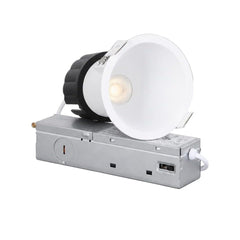
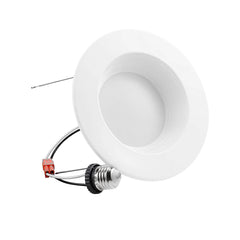
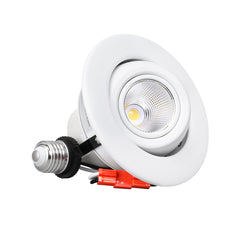
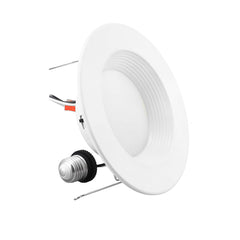
Lighting strategy
Before You Renovate, Rethink the Lighting
You may not need new finishes. You may need better light on the finishes you already have.
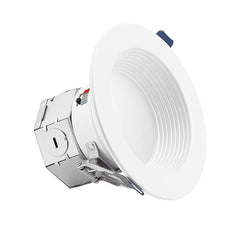
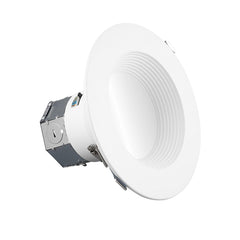
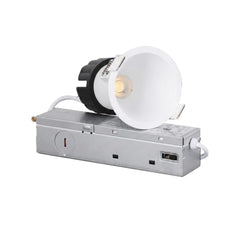
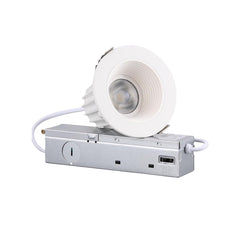
TORCHSTAR · · 5 min read · Lights in this guide
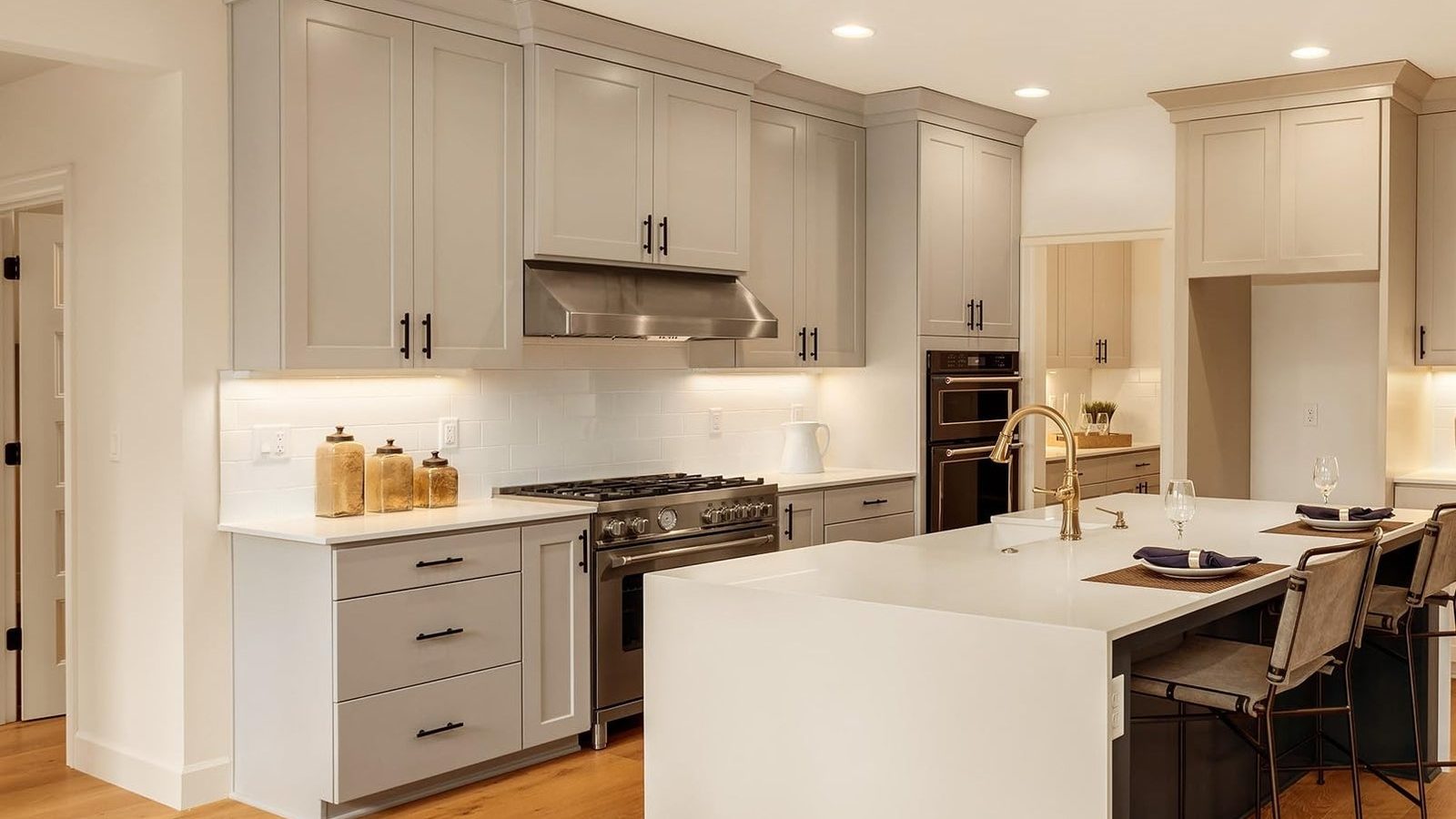
Renovation plans often begin with a replacement list: repaint the walls, replace the flooring, refinish the cabinetry, update the reception desk.
For property managers, interior designers, and commercial operators, there is another question worth asking before defining the demolition scope:
Does the space need new materials—or are its existing materials simply not being lit well?
Lighting cannot replace necessary repairs or resolve a fundamentally poor layout. But when a space remains functional and its finishes are in good condition, evaluating the lighting first can help establish what actually needs to change.
Materials Shape the Space. Lighting Shapes How We See It.
Occupants do not experience a finish sample in isolation. They experience it under the lighting conditions of the actual space.
Whether walls receive adequate light, whether users cast shadows onto work surfaces, and whether reflective finishes produce distracting highlights all affect the result. Lighting design therefore involves more than illuminance: distribution, glare, color quality, and the relationship between illuminated surfaces also matter. The U.S. Department of Energy’s residential lighting guidance treats room surfaces and their reflectance as part of the overall lighting strategy. [DOE guidance]
Consider a hypothetical reception area with well-maintained wood paneling, serviceable furniture, and an appropriate layout. Most of the light falls on the floor, while the reception desk and backdrop receive little useful illumination. Replacing the paneling would not necessarily address that imbalance.
A more informative first step is to test lighting on the existing surfaces, then decide whether those surfaces still need replacing.
Start With Where the Light Goes—not Just How Much You Add
A space that feels dim does not automatically need higher-output fixtures.
DOE retrofit guidance cautions that replacement products can change light distribution. The result may be increased glare, uneven workplane illumination, or less light on walls—even if the replacement meets a target wattage or lumen specification. [DOE retrofit guidance]
Begin with the surfaces people use and the objects they need to see:
| Area or surface | Questions to investigate |
|---|---|
| Reception desks, counters, and workstations | Does light reach the actual task surface? Does the user block it? |
| Walls, displays, and branded backdrops | Do these important visual elements receive appropriate illumination? |
| Stone, glass, and metal finishes | Do distracting reflections appear from normal viewing positions? |
| Seating, circulation, and entrances | Are bright sources directly visible during normal use? |
| Adjacent zones | Do brightness transitions support the intended activities? |
The answers help identify whether the problem calls for different optics, shielding, fixture placement, output, controls—or a change to the material itself.
Color Temperature Is Only Part of the Specification
“Make it warmer” and “make it whiter” are common renovation instructions. Neither is a complete lighting brief.
Correlated color temperature describes the color appearance of the light source; it does not, by itself, describe how objects will appear under that light. DOE distinguishes source color appearance from color rendering and discusses metrics such as CRI and TM-30 for evaluating color quality. [DOE LED basics]
For projects involving wood, textiles, paint, or merchandise displays, do not select a product solely because its specification says 3000K or 4000K. Test candidate fixtures on the actual project materials.
- Check whether the relationships between material colors remain appropriate.
- Compare the appearance of adjacent fixtures and zones.
- Assess the space with both daylight and electric lighting.
- Evaluate stability and appearance throughout the intended dimming range.
Use the exact proposed fixture, driver, and dimmer configuration. DOE guidance recommends testing product samples across the dimming range for issues such as flicker and color shift. [DOE product evaluation guidance]
Address Glare Before Increasing Output
A room can be bright and still be uncomfortable.
Source brightness, shielding, optics, and placement deserve particular attention in LED applications. Shielding and diffusion can help manage glare, but they may also affect output and efficacy, so these choices should be evaluated together. [DOE lighting designer roundtable]
For offices, reception areas, and other spaces where people remain for extended periods, the practical question is not simply whether there is enough light. It is whether people can comfortably see their work and surroundings from normal seated and standing positions.
Adding fixtures without checking those sightlines can leave the underlying problem unresolved.
Build a Mock-Up Before Expanding the Renovation Scope
When existing finishes may be worth retaining, a lighting mock-up can serve as a decision point before demolition.
1. Separate physical defects from visual complaints
List leaks, damaged finishes, failed equipment, and layout problems separately from comments such as “the room feels flat” or “the display looks dull.” Necessary repairs should not depend on whether a lighting change makes the space more appealing.
2. Choose a representative area
Include actual finishes, typical tasks, normal viewing positions, and relevant daylight conditions. A sample fixture operating in an empty room is not a reliable substitute for an in-context test. DOE retrofit guidance recommends calculations or measurements in a mock-up to assess illumination both beneath fixtures and between them. [DOE retrofit guidance]
3. Test the complete system
Include the fixture, driver, controls, and intended installation method. A “dimmable” label does not establish compatibility with an existing dimmer; system behavior depends on the combination of components. [DOE LED dimming guidance]
4. Record decision-ready results
Evaluate more than which option looks better. Document:
- Whether task illumination meets the project requirements.
- Whether glare is acceptable from normal viewing positions.
- Whether important finishes and displays are appropriately illuminated.
- Whether controls operate reliably across the required settings.
- What wiring changes, access work, or surface repairs installation requires.
- Which planned finish replacements remain necessary after the lighting changes.
The goal is not to justify retaining every finish. It is to make replacement decisions with better information.
Keep Visual Benefits and Financial Returns Separate
A lighting project can pursue both a better visual environment and lower operating costs. Those outcomes should be verified separately.
Evaluate visual performance through the mock-up, measurements, and user feedback. Calculate operating savings using actual connected load, operating hours, electricity rates, maintenance assumptions, and installed cost. DOE provides a measurement and verification framework specifically for lighting retrofit and replacement projects. [DOE measurement protocol]
Do not convert an attractive before-and-after photograph into a claim about higher rent or resale value. Without transaction or leasing data, a more defensible project summary explains which lighting conditions improved, which costs decreased, and which existing finishes could be retained.
When Lighting Alone Is Not Enough
Keeping an existing space does not mean keeping every existing fixture.
DOE notes that deteriorated reflective surfaces inside older fixtures may not be corrected by some LED replacement approaches. Replacement products can also change distribution and reduce light reaching walls or ceilings. These conditions belong in the retrofit assessment. [DOE upgrade guidance]
If fixture locations no longer support the space’s use, housings are in poor condition, or a retrofit cannot resolve glare and distribution problems, new luminaires or a revised layout may be the more appropriate choice.
“Lighting first” means diagnose before committing capital—not preserve existing conditions at any cost.
Before Replacing the Finish, Test the Light
A renovation does not have to begin with demolition.
When the layout, materials, and facilities still have useful life, evaluate whether light reaches the right places, presents the materials appropriately, and supports comfortable use.
Some projects will still require substantial renovation. Others may reveal that fewer elements need replacing than originally assumed.
The point is not to use lighting to conceal problems. It is to identify the problem before paying to replace the wrong thing.
For property managers, interior designers, facility teams, and commercial renovation professionals. Linked technical guidance supports the lighting principles discussed; project outcomes depend on existing conditions, design, installation, and operation.